Menopause Personal Training in Ferntree Gully
Menopause personal training is exercise coaching adapted to a person’s goals and capacity during perimenopause, menopause or postmenopause. Programs commonly combine resistance exercise, aerobic activity and balance work, with adjustments for symptoms and recovery.
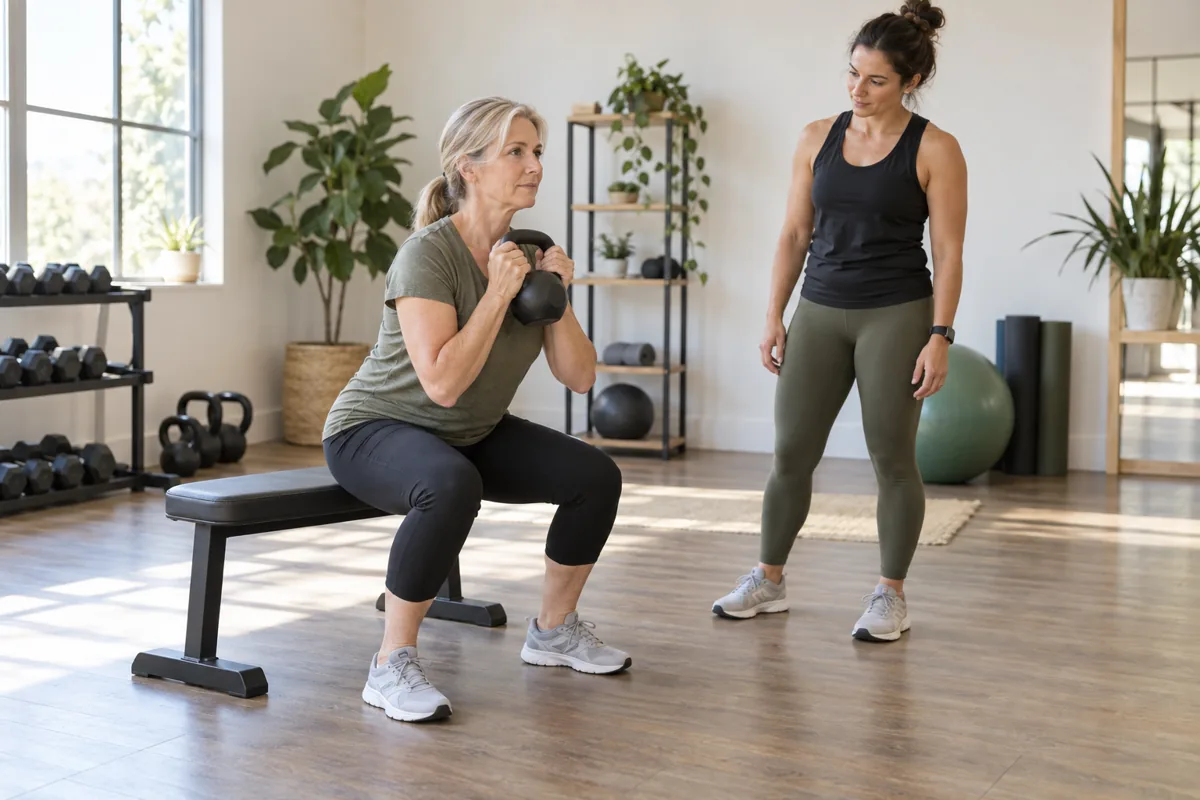
Resistance training during menopause
Changes associated with ageing and menopause can affect muscle strength and bone health. Progressive resistance training challenges muscles through movements such as squats, rows and presses. Exercise choice and loading should account for experience and any diagnosed osteoporosis or other health conditions.
Aerobic exercise, balance and mobility
Walking, cycling and other aerobic activities develop cardiovascular fitness. Balance and mobility exercises support movement control. These activities can complement strength sessions instead of making every workout intense. The Australasian Menopause Society identifies strength, weight-bearing activity and balance work as relevant to bone and physical health.
Adapting training to symptoms and recovery
Sleep disruption, fatigue and joint discomfort may change what feels manageable. A session can be adjusted through load, rest, exercise selection or duration. Recording effort and recovery helps inform progression without assuming that everyone experiences menopause in the same way.
Exercise and menopause care
Personal training supports physical activity; it does not diagnose menopause or replace medical treatment. Persistent symptoms, pelvic floor concerns or fracture risk may require advice from a GP, physiotherapist or other qualified practitioner. Exercise should not be presented as a guaranteed treatment for hot flushes or a way to reverse hormonal change.
Sources: Australasian Menopause Society: bone health · Australian adult movement recommendations.
Personal training in Ferntree Gully
Ferntree Gully Personal Trainers takes enquiries for Ferntree Gully, Boronia, Knoxfield, The Basin and Rowville and surrounding suburbs. Appointments are available from 6am to 8pm, by arrangement. Personal training costs $95 per 45-minute session.
Meet the trainers or enquire about a session with your goals, location and preferred times.
Related personal training services
Mobile Personal Training · Boxing Personal Training · Female Personal Trainer · NDIS Personal Training · Weight-Loss Personal Training
Menopause Personal Training questions
Is it okay to lift weights during menopause?
Yes, resistance training can be appropriate during menopause when exercise selection and loading suit the individual. Diagnosed osteoporosis, injury or other conditions may require guidance from a qualified health professional.
What is the best exercise during menopause?
A combination of resistance exercise, aerobic activity and balance work is generally more useful than relying on one exercise. The right mix depends on health, preferences and current capacity.
What exercises should I avoid during menopause?
Menopause alone does not create a universal list of exercises to avoid. Activities should be modified when symptoms, pain, bone health or another condition make them unsuitable.
How often should a 50 year old woman lift weights?
Australian adult guidance recommends muscle-strengthening activity on at least two days each week. The program should allow suitable recovery and account for experience and health considerations.
Can sessions change when sleep or energy is poor?
Yes, a session can be adjusted when fatigue or poor sleep affects capacity. Changes may include lighter resistance, fewer exercises or longer rest periods.